People who rewrite each application but keep repeating the same projects
There are outcomes, but it is unclear which role they should prove for this job post.
It reframes the role and results of each project around the job post signals.
Career and application strategy service
Connect Dot summarizes what a job post is asking for and finds the experience from your career and projects that fits this application.
Before writing, set the direction so your resume and application questions point to the same strengths.
Redesigned the first-use flow
Improved signup conversion by 18%Designed A/B tests
Experiments judged by hypotheses and metricsReworked payment policies
Reduced support inquiries by 24%When applications get stuck
The same career history needs a different framing depending on the company and role. Connect Dot helps you decide what to show for this job post first.
There are outcomes, but it is unclear which role they should prove for this job post.
It reframes the role and results of each project around the job post signals.
When every good project goes in, the application loses its central message.
It helps you choose projects closest to the role the job post is seeking.
If every question uses a different story, the resume and questions do not add up to one clear strength.
It links each question intent to projects and groups them around the same role direction.
How it works
Three examples show how job post signals, target roles, and your career candidates connect.
Product planning / PM
Marketing / Growth
Engineering / Data
Product preview
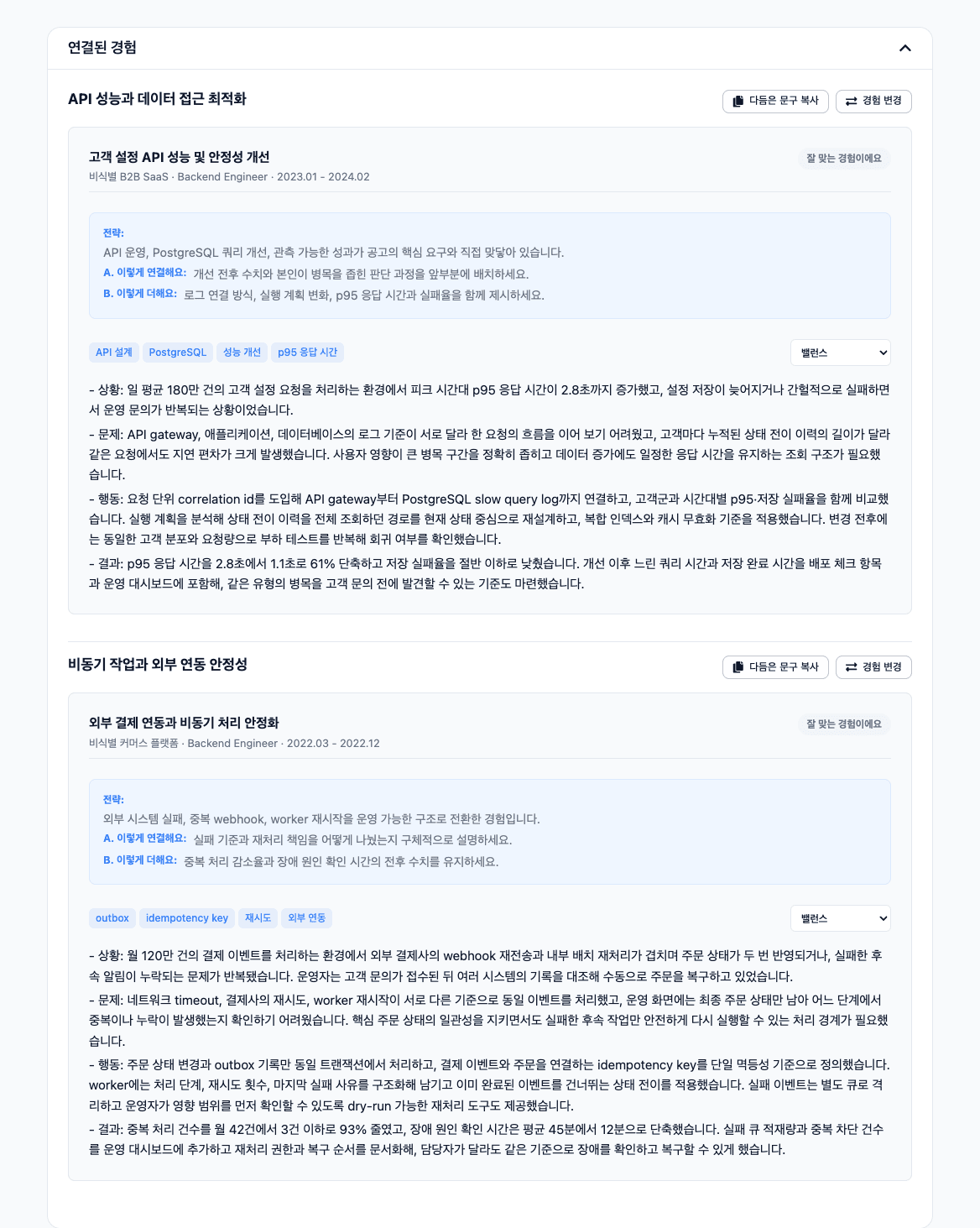
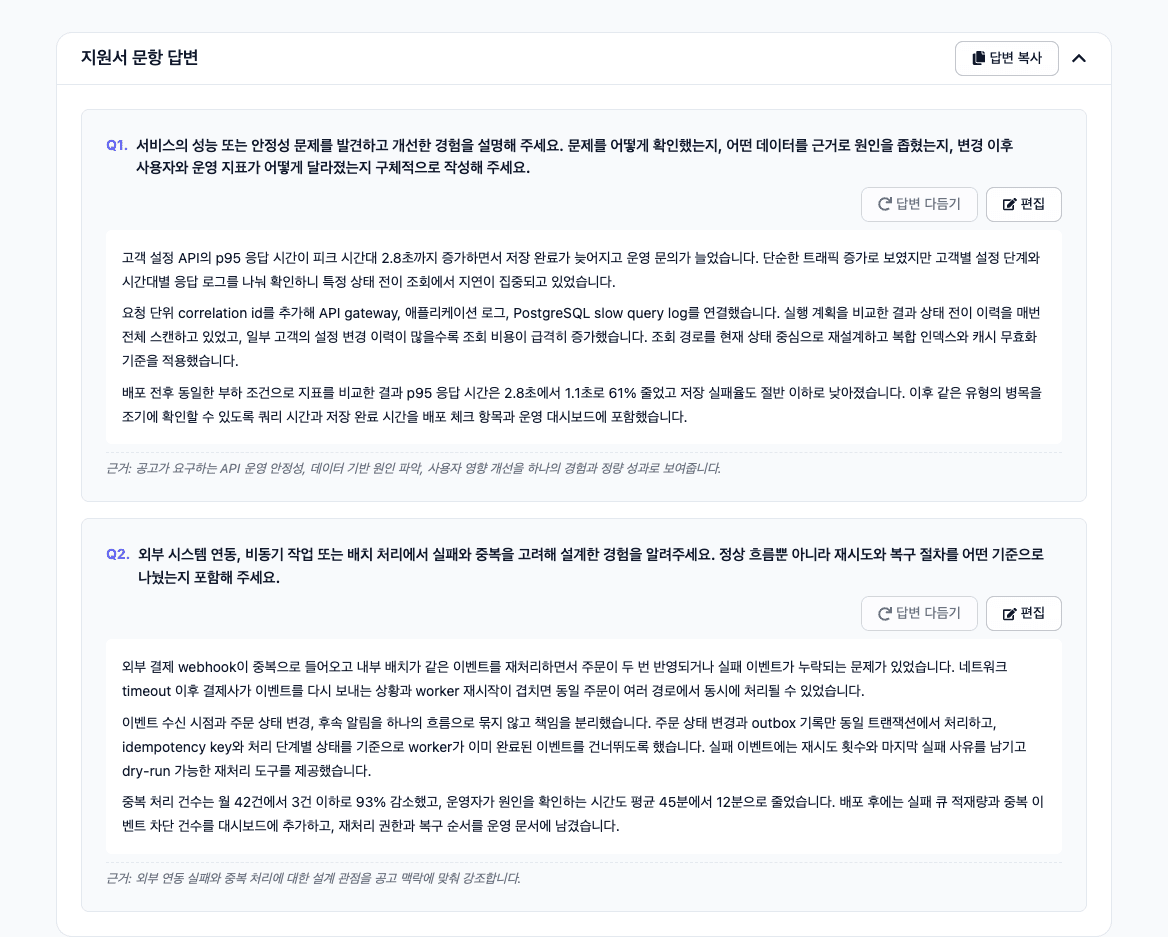
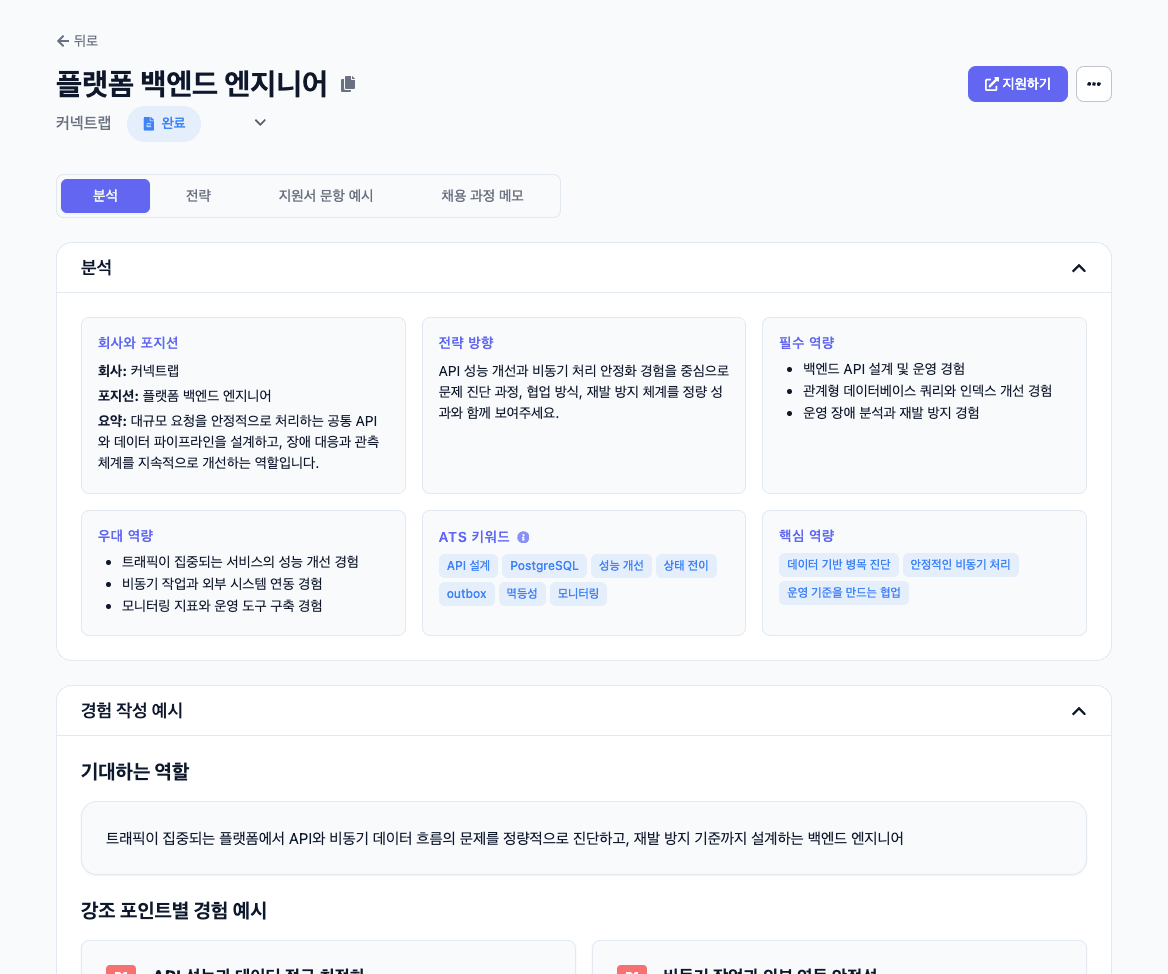
After adding a job post and your experience, you can see which experience fits this application and what evidence needs more explanation.
Based on company and role information, it organizes what this application should show.
Narrow a long job post into criteria for the application.

Review which projects fit this job post and which evidence needs more explanation side by side.
Choose the experience from your work that fits this application.

Understand what the question asks, connect a project, and set the message for the opening paragraph.
Make the resume and application questions point to the same strength.

Workflow
Before writing a long draft, organize your experience and the strengths to show in this application.
Collect scattered resume and project notes in one place.
Use the target job post to set the direction for this application.
Compare your career and projects around the role the job post is seeking.
Check how the selected experience connects to the role the job post is seeking.
Move the confirmed direction into your existing document format.
Application history management (coming soon)
When you keep track of which experience and projects you used for each job post, you can set the direction faster next time.
As application history builds up, you can see which strengths and experiences repeatedly connect and which job posts reuse them. (Coming soon)
With more application history, you can identify repeated outcomes and roles in your target jobs and use them for career development. (Coming soon)
Through MCP and Skills, Connect Dot will expand how your application history and experience data can be used in your own AI tools. (Coming soon)
FAQ
Before generating answer sentences, Connect Dot compares what the job post wants with your career and projects. That helps you decide which experience to choose first.
A resume file is not required, but career and project details help Connect Dot organize the direction more accurately. You can start with just a few major projects.
No. The analysis result is a reference and direction-setting aid before submission. We recommend rewriting it into your usual resume or application format before submitting.
Look at what the job post asks for alongside your career and projects, then set the direction for your resume and application questions.
Get started for free